Frankie Klein · 5 September 2026
Eclipse Shadow Patterns Shape New Directions in Murano Chandelier Production
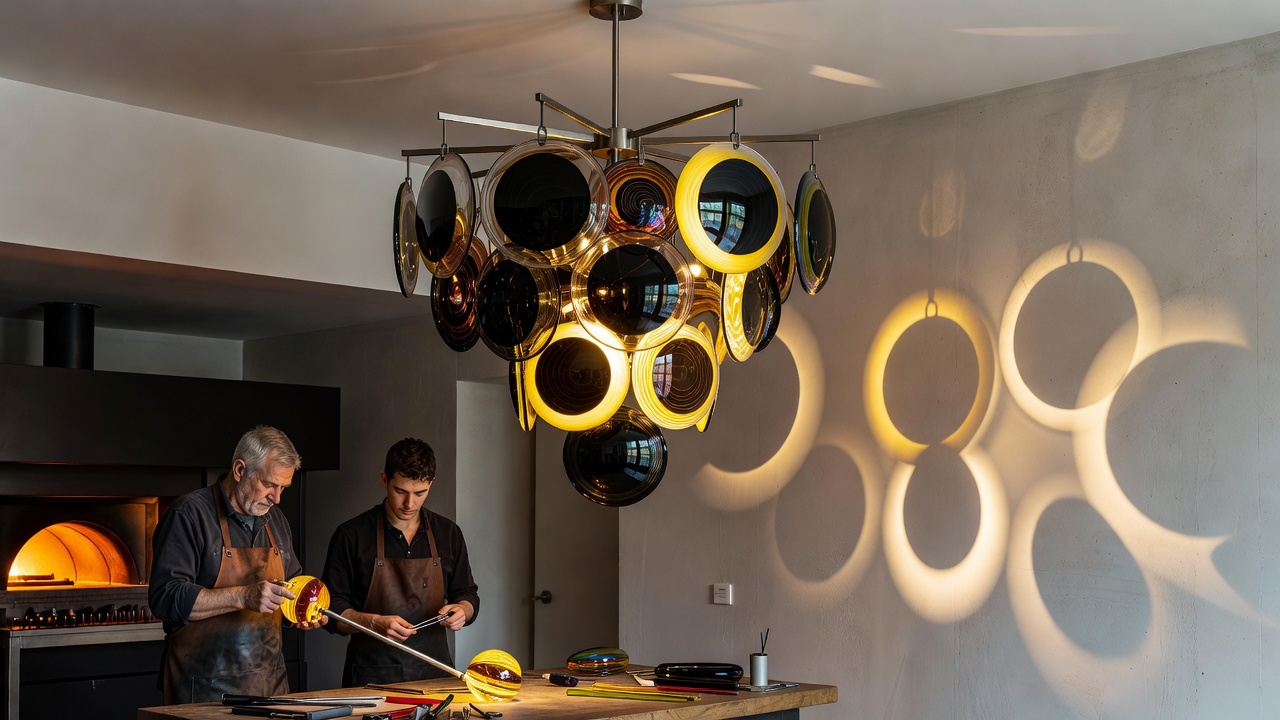
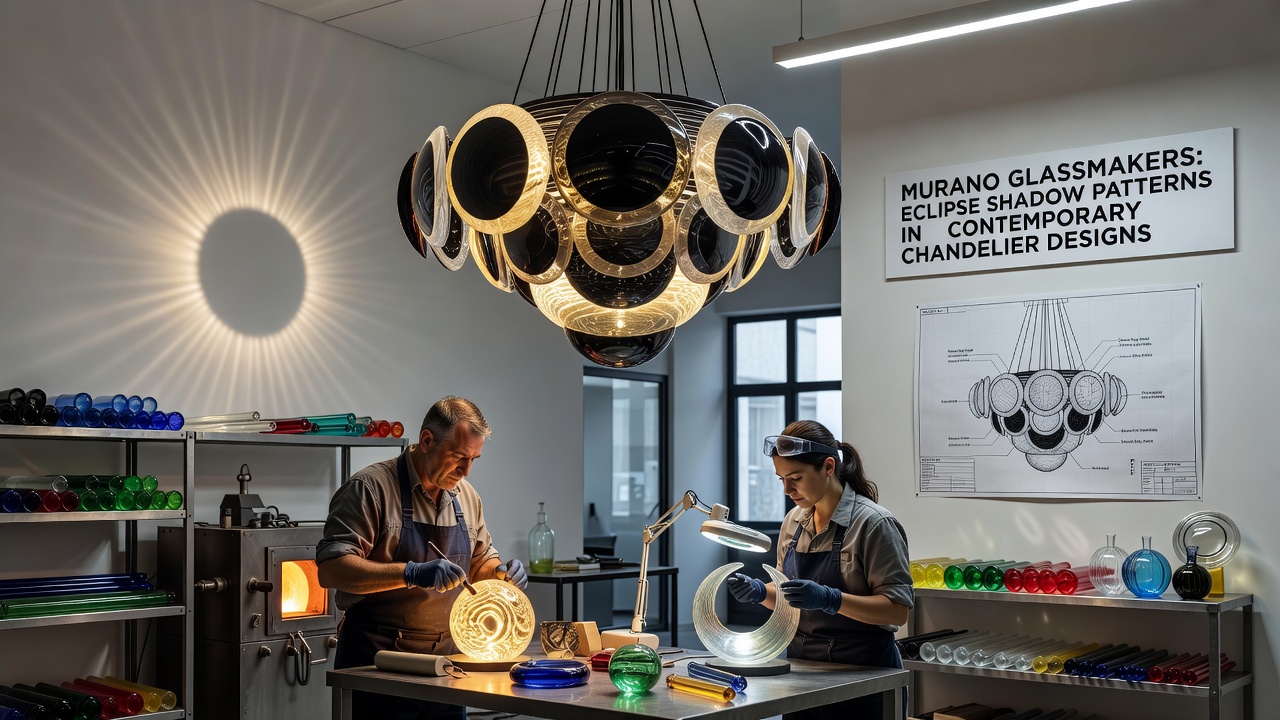
Murano glassmakers have started embedding eclipse shadow patterns into contemporary chandelier designs through precise glass blowing and etching methods that replicate the light transitions observed during solar eclipses, and these techniques build on centuries of Venetian glass expertise while responding to demand for celestial-themed lighting fixtures in international markets.
Traditional Techniques Meet Modern Motifs
Glass production on the island of Murano dates back to the 13th century when Venetian authorities relocated furnaces to reduce fire risks in the city center, and artisans there developed methods for creating intricate lighting pieces that now incorporate geometric forms drawn from eclipse observations recorded by astronomers in multiple countries. Workers heat silica mixtures to temperatures exceeding 1100 degrees Celsius before shaping them into curved elements that cast graduated shadows when illuminated, and this process requires careful control of cooling rates to avoid structural weaknesses in the final assemblies.
Design teams document eclipse events using high-resolution photography and then translate those images into templates for sandblasting and color layering, while master glassblowers adjust bubble sizes and wall thicknesses to produce the desired light diffusion effects. One workshop completed a series of fixtures last year that featured interlocking crescent forms suspended from brass frames, and each piece underwent testing for weight distribution and electrical safety before shipment to galleries in Europe and North America.
Material Innovations and Pattern Development
Recent material adjustments include the addition of trace minerals that produce subtle color shifts under different lighting conditions, and these modifications allow the shadow patterns to appear more pronounced during evening use. Artisans combine clear cristallo glass with opaque canes in sequences that mimic the corona visible during totality, and the resulting chandeliers weigh between 15 and 40 kilograms depending on the number of arms and the complexity of the suspended elements.
Industry records show that Murano exported over 1200 custom lighting installations in 2025, with a growing share featuring astronomical themes, and suppliers note increased orders from hospitality groups seeking distinctive focal points for hotel lobbies and event spaces. The integration of eclipse patterns requires collaboration between glass specialists and lighting engineers who calculate lumen output and heat generation to ensure compatibility with LED sources that operate at lower temperatures than older incandescent bulbs.
Exhibition Plans and Market Reach
Preparations are underway for presentations scheduled in September 2026 at design events in Milan and Dubai, where manufacturers will display prototypes that combine traditional hand-finishing with digital modeling software used to preview shadow effects before production begins. Trade data from the Italian glass association indicates steady growth in high-value lighting exports, and observers attribute part of this trend to the appeal of unique decorative motifs that differentiate pieces from mass-produced alternatives.
Training programs at the island's glass schools now include modules on celestial pattern drafting, and students practice replicating eclipse phases through layered glass applications that require multiple reheating cycles. These educational efforts maintain the transmission of skills across generations while introducing computational tools that assist in scaling designs for larger installations without compromising the handmade character of each component.
Conclusion
Murano's ongoing adaptation of eclipse shadow patterns into chandelier work demonstrates how established glassmaking processes continue to evolve through the incorporation of natural phenomena references, and the resulting fixtures provide both functional illumination and visual references to astronomical events. Continued documentation of production methods and material performance will support further refinements as demand for these specialized designs expands across global markets.