Frankie Ludwig · 17 October 2026
Italian Hill Towns Feature Temporary Observatories for Medieval Star-Guided Pottery Creation
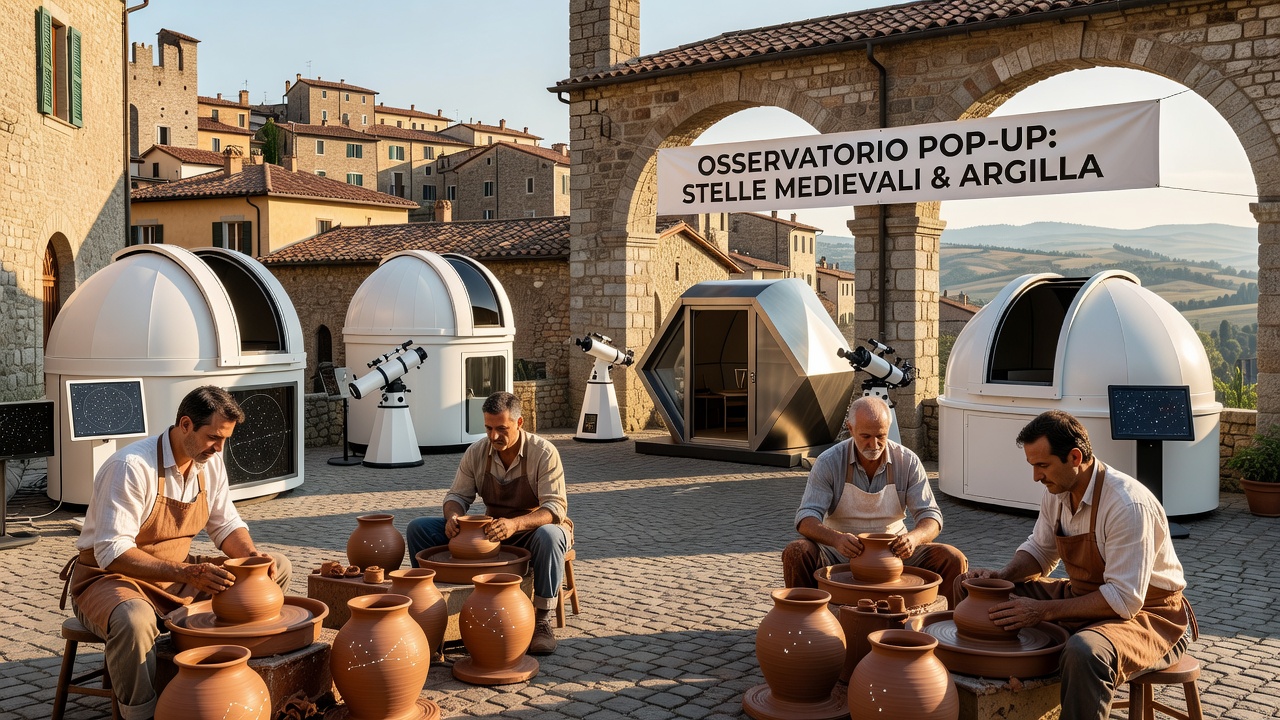
Italian hill towns across regions such as Tuscany and Umbria have established temporary observatories that connect local potters with documented medieval star positions for vessel shaping. These sites operate during specific seasonal windows, drawing on astronomical records preserved in monastic archives from the 13th and 14th centuries. Towns including San Gimignano, Montepulciano, and Spello coordinate the installations each year, with setup crews positioning portable telescopes and alignment tools on historic ramparts.
Historical Records Inform Modern Practices
Medieval manuscripts from Italian monasteries contain precise notations of stellar positions used in craft timing, and researchers at institutions such as the University of Bologna have cataloged these entries for cross-reference with contemporary astronomy software. Potters consult these alignments when forming rims and bases on clay vessels, matching angles to documented celestial coordinates rather than arbitrary measurements. Data compiled by the Italian National Institute of Astrophysics shows consistent patterns in how 14th-century scribes recorded Orion and Ursa Major transits relative to local horizons.
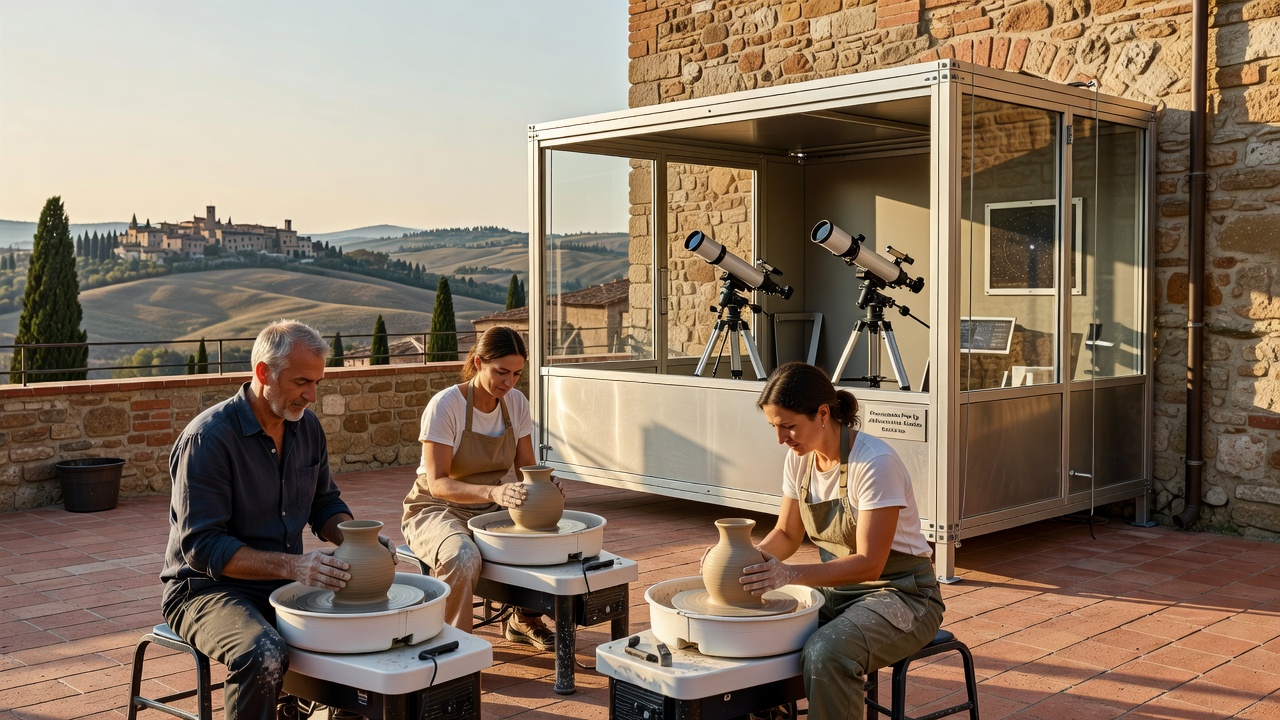
Observers note that the practice revives techniques once tied to agricultural calendars, where star sightings determined firing schedules to avoid humidity fluctuations. In practice, artisans wheel clay forms while assistants track stellar markers through calibrated sighting tubes, ensuring vessel profiles correspond to the same geometric ratios noted in period ledgers.
October 2026 Schedule and Logistics
Events scheduled for October 2026 will run from the first new moon through the following full moon, allowing multiple alignment sessions under clear autumn skies. Municipal councils in participating towns allocate public squares and unused towers for equipment placement, while transport teams move kilns and clay supplies via narrow roads designed centuries earlier. Attendance records from prior cycles indicate several hundred visitors per site, including students from regional art academies who document the process through photography and measurement logs.
Equipment includes lightweight refractor telescopes paired with digital star charts loaded with medieval coordinate sets, and potters work in shifts timed to specific stellar culminations. Local suppliers provide clay sourced from nearby riverbeds, selected for mineral content that matches historical descriptions of medieval ceramic bodies.
Community Integration and Economic Factors
Artisan cooperatives in these towns manage the observatories, rotating responsibilities among families with multi-generational pottery traditions. Sales of finished vessels occur through town markets rather than online channels, and transaction volumes reported by the Chamber of Commerce of Siena show measurable increases during alignment periods. Training sessions for younger potters incorporate both archival study and hands-on telescope operation, preserving technical knowledge alongside craft skills.
Regional tourism boards coordinate visitor access, issuing timed entry passes that limit group sizes on the narrow streets. Infrastructure upgrades completed in 2024 include reinforced viewing platforms and additional lighting controls to minimize light pollution during sessions. Partnerships with the European Southern Observatory provide occasional equipment loans for high-precision tracking, though primary reliance remains on ground-based medieval coordinate replication.
Technical Alignment Process
The alignment procedure begins with verification of stellar positions against translated manuscript entries, followed by positioning of the potter's wheel relative to the horizon line. Assistants adjust sighting devices until the target star matches the recorded azimuth, at which point shaping commences. Vessel dimensions are cross-checked against proportional ratios derived from the same records, producing forms that maintain consistent proportions across multiple towns despite variations in local clay.
Documentation from each session includes timestamped photographs and coordinate logs submitted to a shared database maintained by participating municipalities. This archive supports comparative studies between sites and allows future adjustments based on accumulated measurements.
Conclusion
Italian hill towns continue to integrate medieval astronomical data with pottery production through these seasonal observatories, sustaining documented craft methods while adapting to current logistical requirements. The October 2026 cycle will extend the established pattern, linking historical records with active artisan work in preserved hilltop settings.