Logan Braun · 19 September 2026
Lunar Timing Experiments Unite Italian Textile Artisans with Astronomers in Village Revivals
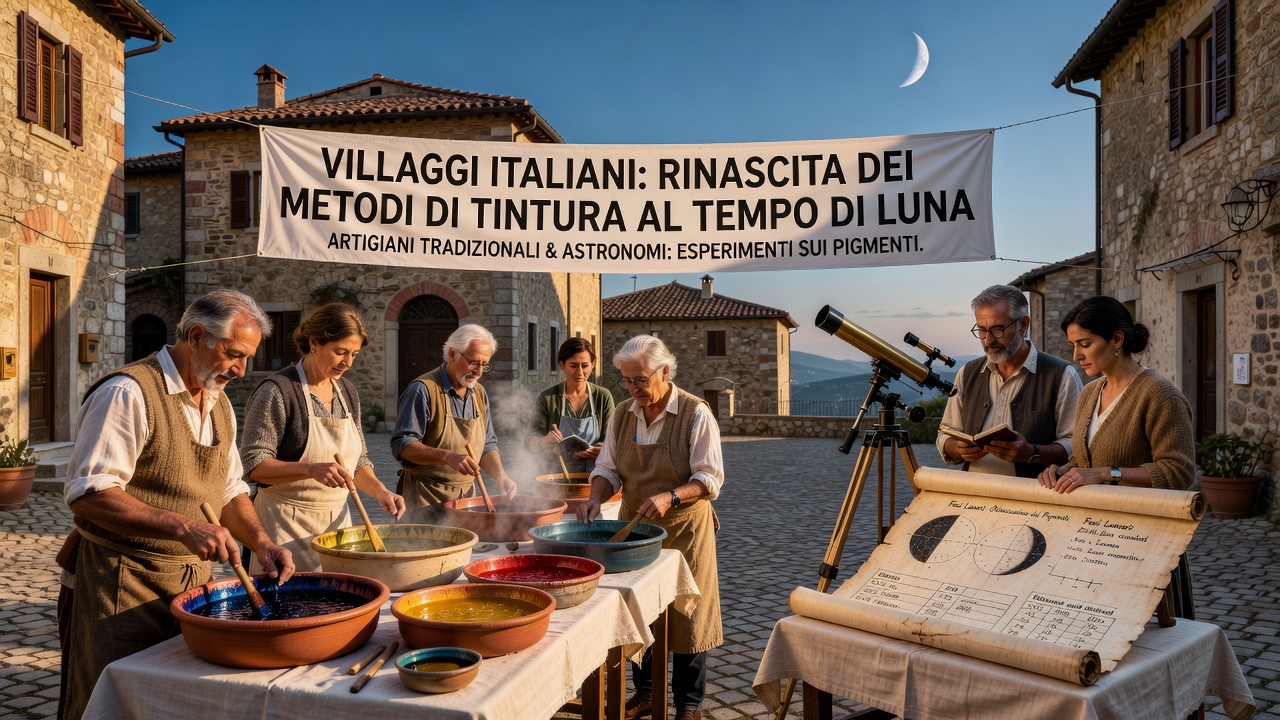
Italian villages have begun reviving moon-timed textile dyeing methods through partnerships between traditional artisans and astronomers who track pigment timing experiments with precision instruments. These efforts draw on historical practices where plant-based dyes were prepared according to lunar phases, and researchers have documented how certain pigments achieve greater color stability when processed during specific moon cycles. Villages in regions such as Umbria and Tuscany have hosted joint workshops since early 2025, where teams measure light exposure and moisture levels alongside astronomical data.
Historical Roots of Lunar Dyeing Practices
Records from the 18th century describe Italian dyers who aligned their work with the moon's phases to extract and fix colors from madder, woad, and walnut hulls, while modern analysis confirms that these timings influenced oxidation rates in natural compounds. Historians at the University of Bologna have catalogued ledgers showing how communities scheduled dye baths around full and new moons to optimize absorption into wool and silk fibers. This approach declined during the industrial era as synthetic dyes became widespread, yet small groups preserved the techniques through oral traditions and family workshops.
Today those preserved methods form the basis for renewed experiments that combine ancient timing rules with contemporary astronomy. Astronomers contribute data on lunar illumination and tidal influences that affect humidity, allowing artisans to adjust extraction temperatures and immersion durations accordingly. One project in a hilltop village near Perugia has recorded improved dye fastness when batches were completed within two days of a full moon, matching patterns noted in older guild documents.
Current Collaborations and Field Experiments
Teams of artisans and astronomers now conduct side-by-side trials in open-air courtyards equipped with portable spectrometers and weather stations. During each session participants record pigment yield, color saturation, and fabric durability while correlating results with precise lunar ephemerides supplied by observatories. Data collected through spring 2026 indicates that certain indigo reductions reach peak concentration when initiated under waxing gibbous conditions, a finding that aligns with 19th-century observations preserved in regional archives.
Workshops scheduled for September 2026 will expand these trials to include additional villages in the Marche region, where researchers plan to test how varying elevations interact with moonlight intensity during dye processing. Equipment from the European Southern Observatory has been loaned for these sessions, providing high-resolution lunar mapping that helps predict optimal windows for each pigment type. Artisans report that the structured timing reduces batch variability, although they continue to rely on sensory judgment for final decisions.
Community and Economic Dimensions
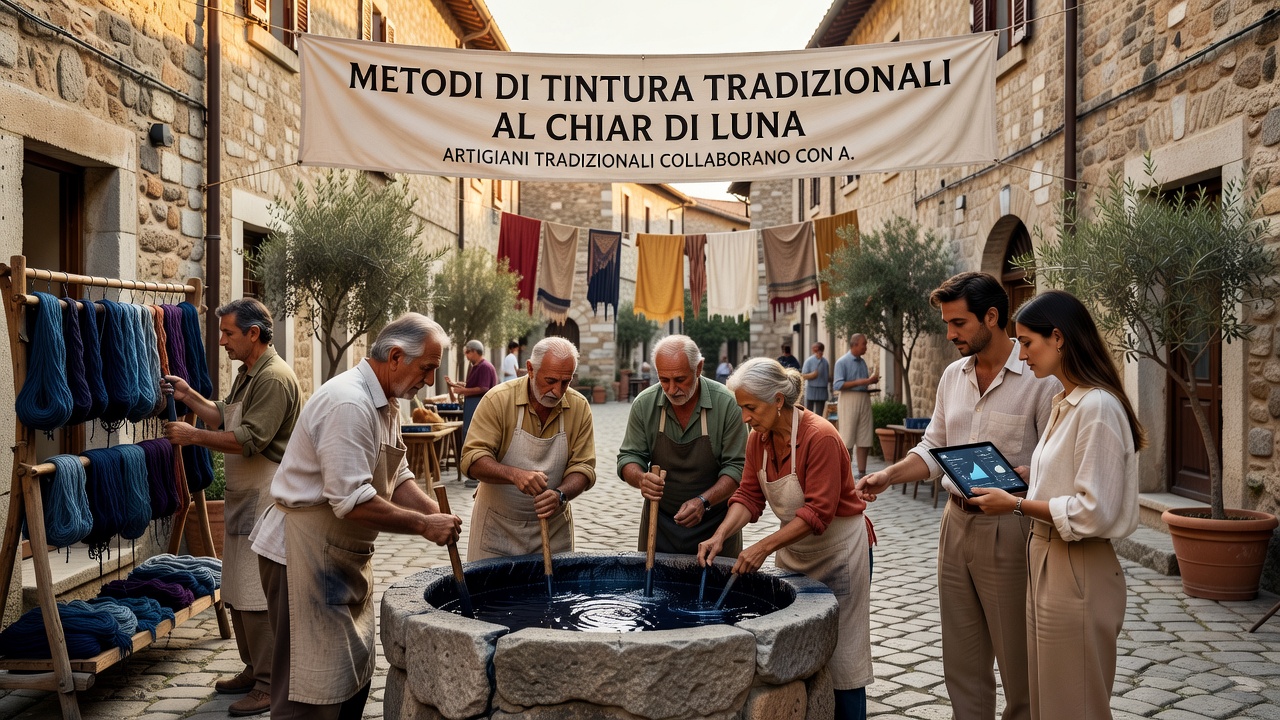
Local cooperatives have formed to manage shared dye houses and distribute resulting fabrics through regional markets. These groups receive support from Italy's Ministry of Culture, which has allocated resources for equipment and training programs that integrate astronomical tools with traditional skills. Sales of moon-timed textiles have increased in the past year, with buyers citing interest in traceable, heritage-based products that carry documented production timelines.
Training sessions attract younger residents who learn both the chemical principles behind natural dyes and the basics of celestial navigation used to schedule work. In one village, a cooperative now employs a part-time astronomer to maintain calendars that list recommended dyeing windows through the coming seasons. This arrangement has allowed production to scale modestly while maintaining the precision required for consistent results.
Technical Methods Under Study
Experiments focus on timing variables such as the moment when dye solutions are first combined with mordants, the duration of solar exposure prior to lunar processing, and the cooling period after extraction. Instruments measure pH shifts and light spectra during these intervals, generating datasets that artisans and scientists review together. Findings suggest that certain red dyes derived from local plants exhibit stronger bonds to protein fibers when the final rinse occurs shortly after moonrise on designated evenings.
Participants also examine how microclimates within valleys alter the effectiveness of lunar timing, leading to site-specific adjustments rather than universal rules. A study group affiliated with the Italian National Research Council has begun compiling these variations into a shared database accessible to other communities interested in similar revivals. The database includes photographic records of color outcomes across multiple lunar cycles, providing reference material for future projects.
Conclusion
Italian villages continue to expand these moon-timed dyeing initiatives as collaborations between artisans and astronomers produce measurable improvements in pigment performance and community engagement. Ongoing experiments scheduled through September 2026 will supply additional data on elevation effects and seasonal variations, supporting broader adoption of the revived methods. The integration of historical records with modern astronomical tools demonstrates how traditional practices can be documented and refined while remaining grounded in observable natural cycles.