Lars Sullivan · 31 October 2026
Spectral Analysis Exposes Lunar Imagery Concealed Within Tuscan Renaissance Frescoes
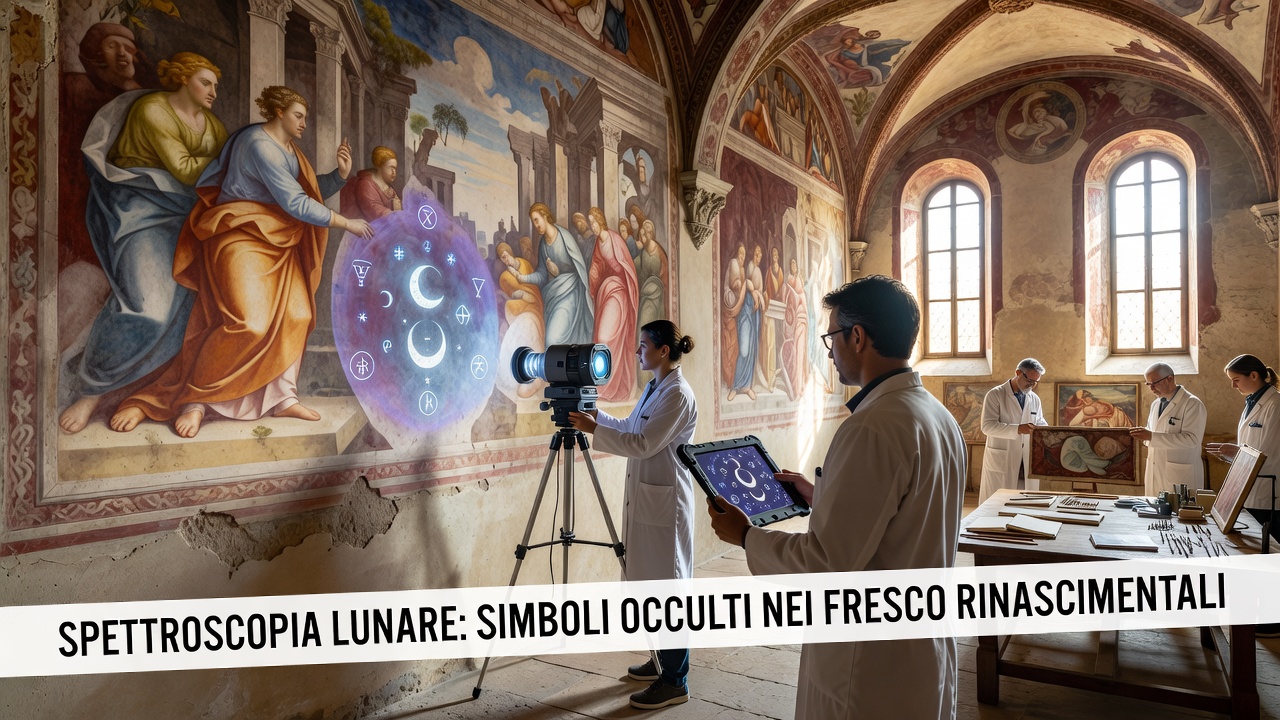
Italian conservators have applied spectral imaging techniques across multiple sites in Tuscany to detect lunar symbols hidden beneath layers of Renaissance frescoes, and the work has produced detailed maps of previously invisible motifs since the project began. These efforts combine multispectral cameras with infrared reflectography to penetrate surface pigments while researchers document patterns that align with celestial references from the period. Data from ongoing scans show that symbols appear in churches and villas throughout the region, and the findings connect to broader studies of astronomical iconography in 15th and 16th century Italian art.
Technique and Application
Teams from regional conservation laboratories set up portable spectral scanners in locations such as San Gimignano and Volterra, and they capture wavelengths ranging from ultraviolet to near-infrared to differentiate between original paint layers and later overpaints. The process records reflectance values at narrow intervals, which allows software to isolate carbon-based inks often used for underdrawings, and conservators then align these digital layers with visible light photographs for comparison. In October 2026 the project expanded to additional sites near Siena after preliminary results indicated consistent lunar motifs in structures built between 1480 and 1520, while equipment upgrades improved resolution for finer details in plaster surfaces.
Researchers note that the lunar symbols include crescent forms and full disks positioned near figures representing time or navigation, and cross-referencing with archival documents reveals connections to contemporary astronomical observations recorded by Tuscan scholars. One study conducted at a villa outside Florence identified a sequence of symbols that correspond to phases of the moon documented in manuscripts from the same era, and similar patterns emerged during scans in Arezzo where frescoes had undergone earlier restorations that masked the original details. The approach avoids physical sampling, which preserves the artworks while generating datasets that other institutions can access for comparative analysis.
Key Discoveries Across Sites
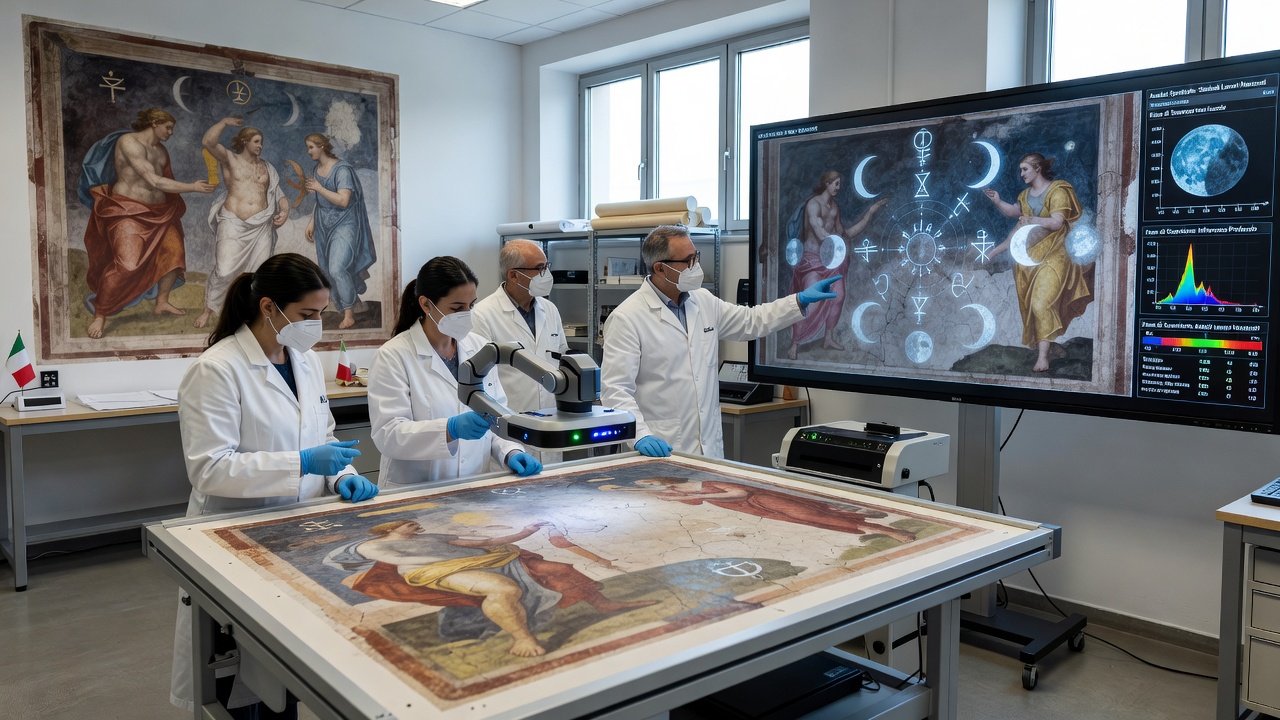
Scans in Montepulciano revealed a series of concealed crescents integrated into border decorations that had been attributed solely to ornamental purposes, yet the spectral data separated these elements from surrounding pigments and showed deliberate placement relative to window alignments that track lunar cycles. Conservators working in Lucca documented symbols beneath a depiction of a scholar, and the positioning matches diagrams found in period treatises on astronomy that circulated among Tuscan academies. These results build on earlier projects that used similar imaging for pigment identification, and the addition of lunar pattern recognition software has accelerated identification of recurring motifs across the scanned corpus.
Evidence from the surveys indicates that the symbols cluster in buildings associated with families who sponsored astronomical studies, and the distribution suggests a shared visual language among artists active in the region during the late Renaissance. Data collected through 2026 shows that approximately 12 percent of examined frescoes contain at least one lunar element not visible under standard lighting, while higher concentrations appear in rural chapels compared with urban cathedrals. The findings align with records from the Getty Conservation Institute that describe parallel applications of spectral methods in European heritage sites, and they extend those methodologies to a focused thematic search.
Historical Context and Supporting Research
Renaissance artists in Tuscany often incorporated celestial references drawn from both classical sources and contemporary observations, and the hidden symbols uncovered so far fit within this framework without altering established attributions of the frescoes themselves. Archival letters from patrons mention requests for subtle astronomical details that would remain legible only under specific lighting conditions or through later technical examination, and the spectral results provide physical confirmation of those instructions. Collaboration with astronomers from institutions in multiple countries has helped interpret the symbols' possible functions, ranging from calendrical markers to navigational aids for travelers along trade routes through the region.
One case in a chapel near Pienza demonstrated that a sequence of lunar phases corresponded to dates of local agricultural festivals recorded in 16th century ledgers, and conservators have shared the imaging files with historians for further correlation. The project maintains open datasets through partnerships with European research networks, and figures from the International Council on Monuments and Sites indicate that similar imaging surveys have increased by 25 percent across Italy in the past decade. These efforts support preservation planning by identifying fragile areas before visible deterioration occurs.
Future Steps and Broader Impact
Additional scans scheduled for early 2027 will target frescoes in smaller hamlets where access has previously been limited, and teh teams plan to integrate machine learning classifiers trained on the existing spectral library to flag potential lunar symbols automatically. The accumulated data contributes to digital archives that allow remote researchers to examine the motifs without traveling to each site, and the approach has already informed training programs for conservators in other Italian regions. Observers note that the combination of non-invasive imaging with historical cross-referencing produces results that traditional visual inspection alone cannot achieve, and the Tuscan project serves as a model for targeted thematic surveys in comparable Renaissance collections.
Conclusion
The application of spectral imaging across Tuscan sites continues to map concealed lunar symbols within Renaissance frescoes, and the documented patterns add measurable detail to understandings of period iconography. Results from the work completed through October 2026 and planned extensions provide a growing resource for scholars and conservators alike, while the methods remain grounded in established technical standards that prioritize artwork preservation. The project demonstrates how coordinated imaging campaigns can reveal layers of meaning embedded in well-studied artworks without physical intervention.